
Science Department
Science at our school begins with a child's natural curiosity which grows into disciplined, evidence-based thinking — through hands-on inquiry, real-world problem solving, and programmes that support every learner.
Every child is a natural inquirer
.jpg)
Children arrive at school already asking questions. How does a caterpillar turn into a butterfly? Why does a metal spoon feel colder than a wooden one? Why do magnets pull some things but not others? At Bukit View Primary School, our work in Science begins with that instinct and our job is to grow it into something disciplined and lasting.
We teach Science not as a set of facts to be memorised, but as a way of making sense of the world: observing carefully, asking good questions, weighing evidence, and drawing conclusions one can defend. In doing so, we help our students become the self-directed learners our school aspires to nurture – young people who are curious about their world and equipped to understand it.
What follows is how that journey unfolds across the primary years, from the first spark of curiosity, to thinking like a scientist, to using Science to solve real problems.
Inspiring curiosity about the world
.jpg)
The journey begins with wonder. Before students learn the methods of Science, they need reasons to care about it and we surround them with those reasons.
Our campus is itself a learning environment. The Science Garden Trail invites students to explore thematic gardens, Herbs & Spices, Cacti & Succulents, Ferns, and Fragrant gardens, where they observe living things up close and begin to notice the diversity around them. Through the Edible Greens programme, students plant, tend, and harvest their own greens, coming to understand repeated patterns of change in nature while appreciating their role in caring for the environment and contributing to food resilience.
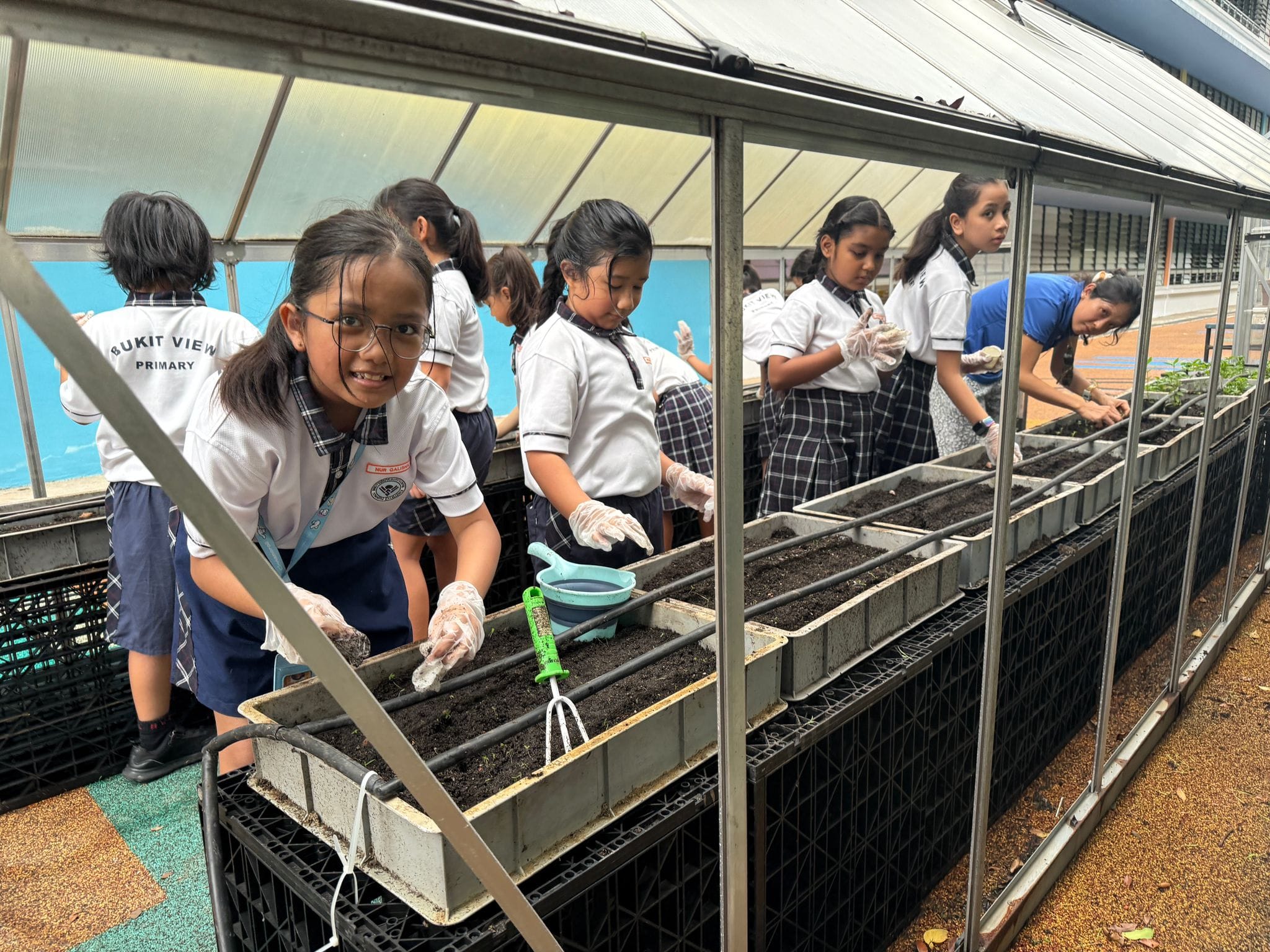
In the classroom, hands-on SPARKLE kits and laboratory activities turn abstract ideas into things students can see, touch, and test, from exploring living things to investigating materials.
For our Primary 3 students, a subscription to The Young Scientists magazine extends this curiosity beyond the classroom, connecting the concepts they meet in lessons to the world they live in.
Learning to think and work like a scientist
Curiosity becomes Science when students learn to investigate. As they progress, our students take on the practices that scientists themselves use.
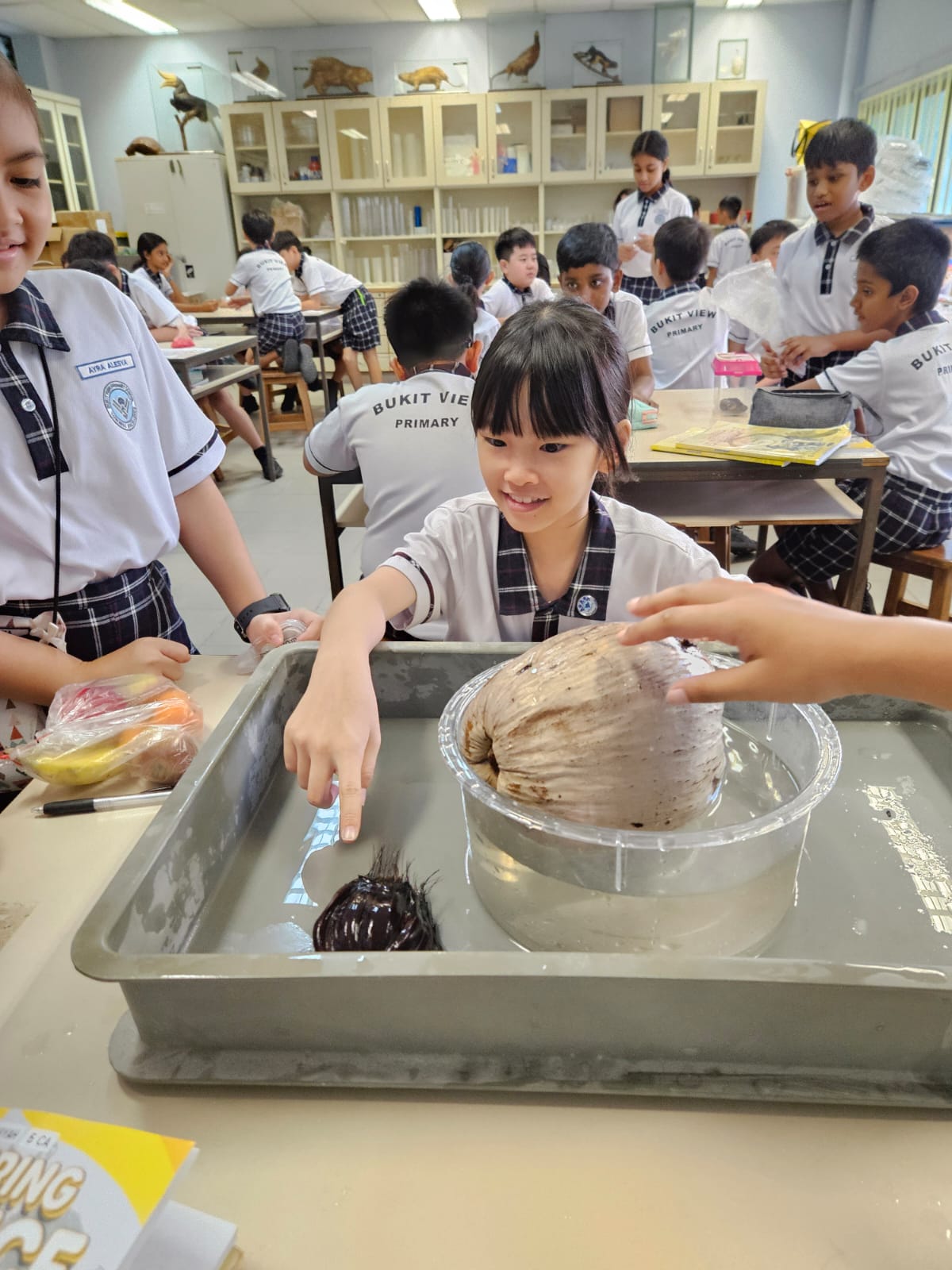
They pose questions that can be tested, design fair investigations, gather and record evidence, and construct explanations they can support with data. They learn to communicate their findings clearly and to listen to others with respect weighing alternative ideas rather than rushing to be right. These are the habits of mind that the Singapore Science curriculum sets out, and they are the same habits that make a confident, independent learner in any subject.
Digital platforms such as the Student Learning Space (SLS) support this inquiry, giving students tools to explore, collaborate, and take ownership of their learning. For students with a strong foundation and a keen interest in Science, the Excellence 2000 (E2K) Science Enrichment programme stretches their scientific inquiry further, developing independent investigation skills and a deeper grasp of challenging concepts.
Using Science to solve real problems
The aim of all this is application. We want our students to see Science not as something that lives only in textbooks, but as a way to create and contribute.
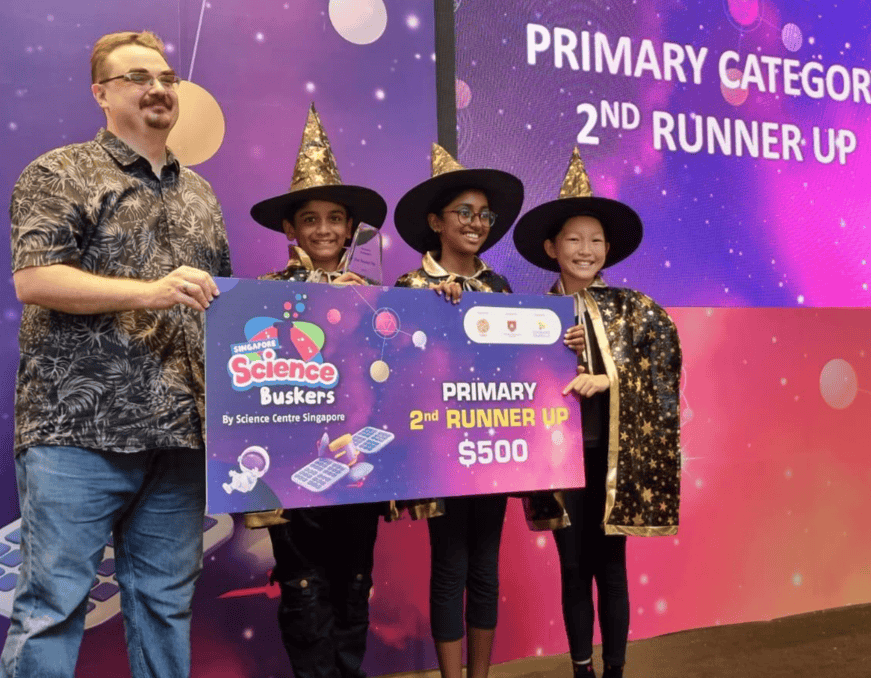
We open opportunities for students to apply their learning beyond the classroom and to test their ideas against real challenges. Our students have taken part in Science Buskers, the STEM Challenge, and the Tan Kah Kee Young Inventors' Award, among other competitions and events organised by the Singapore Science Centre and partner institutions. In one recent showing, our students were placed 2nd Runner-Up in the Primary Category at Science Buskers a reflection of the confidence and creativity these experiences build.
Whatever the outcome, the value lies in the doing: in framing a problem, generating ideas, and seeing one's own thinking make a difference.
Supporting every learner
Every child learns differently, and our programmes are designed to meet students where they are. Our after-school Science Remediation offers targeted support in a nurturing, small-group setting, helping students close specific learning gaps. At the same time, our talent development opportunities including E2K and the Science Olympiad give students, ready for greater challenge, the room to grow. Across this range, our intent is the same, that each pupil finds Science within their reach and worth their effort.
Assessment that supports learning
We see assessment as part of learning, not separate from it. Alongside understanding what students have learned, we use assessment to understand how they are learning so that feedback is timely, gaps are addressed early, and students are supported to take the next step. Educators interested in our approach are warmly invited to write to us.